

All About the Order:
The Sovereign Imperial Order of Siyyon
What we represents:
The word Siyyon (also spelled Zion, Tzion, Tsion, or Tsiyyon) is a Hebrew name that has several meanings in the Bible. It can refer to:
- A hill in Jerusalem, also known as the City of David, where King David built his palace and where the Jebusite fortress was located12
- The Temple Mount, where Solomon built the first temple and where the second temple was later rebuilt12
- The whole city of Jerusalem, especially in the context of its religious and spiritual significance12
- The land of Israel, or the Jewish people as a whole, as a symbol of their covenant with God and their hope for redemption13
- A utopian vision of a peaceful and harmonious community, or the heavenly city of God in the afterlife3
The mount Siyyon (or Mount Zion) is the name of the hill in Jerusalem that was originally called Siyyon, but later shifted to other locations as the city expanded and the temple was built2 Today, Mount Zion refers to the western hill of Jerusalem, where several important religious sites are located, such as the tomb of King David, the room of the Last Supper, and the Dormition Abbey2
The word Siyyon and the mount Siyyon are important for Jews, Christians, and Muslims, as they represent the sacred history, the divine presence, and the future promise of God in Jerusalem and in the world123
- Siyyon is the name of a hill in Jerusalem, on which the Temple was built. It is also used to symbolize the city itself, especially as a religious or spiritual center12.
- Siyyon is the name of the historic land of Israel, as well as the Jewish people and their homeland. It is also used to express the hope and longing for the restoration of Israel and the coming of the Messiah12.
- Siyyon is the name of a place or community that is devoted to God and his will. It is also used to describe an ideal state of harmony, peace, and justice, both in this world and in the afterlife13.
Siyyon is important for many reasons, depending on the context and perspective. For Jews, Siyyon represents their ancestral and spiritual connection to the land of Israel and their covenant with God. For Christians, Siyyon represents the fulfillment of God’s promises in Jesus Christ, who is believed to be the Messiah and the Son of God. For others, Siyyon represents a vision of a better world, where God reigns and his people live in harmony.
The throne of Saul was the father royal house of the throne of David. According to the Bible, Saul was the first king of Israel, and David was his successor.
David was also the son-in-law of Saul, as he married Saul’s daughter Michal, this fact made David had the other eleven tribes back to govern one Israel United after seven years reigning only the tribe of Judah, by the influence of the Princess of the King Saul Michal make support to David when he ask her to back to live with him to transfer (even morally) indirectly her Father authority to him to govern all tribes, the inspiring the future concept of the” ius uxoris “.
Territory
According to the Hebrew Bible, following the completion of the conquest of Canaan by the Israelite tribes, Joshua allocated the land among the twelve tribes. Kenneth Kitchen dates this conquest to just after 1200 BCE.[9]
The Bible recounts that Joshua assigned to Benjamin the territory between that of Ephraim to the north and Judah to the south, with the Jordan River as the eastern border, and included many historically important cities, such as Bethel, Gibeah, and encroached on the northern hills of Jerusalem. (Joshua 18:11–28)
According to rabbinical sources, only those towns and villages on the northernmost and southernmost territorial boundary lines, or purlieu, are named in the land allocation, although, in actuality, all unnamed towns and villages in between these boundaries would still belong to the tribe of Benjamin.[13] The Babylonian Talmud names three of these cities, all of which were formerly enclosed by a wall, and belonged to the tribe of Benjamin: Lydda (Lod), Ono (Kafr ‘Ana),[14][15] and Gei Ha-ḥarashim.[16] Marking what is now one of the southernmost butts and bounds of Benjamin’s territory is “the spring of the waters of Nephtoah” (Joshua 18:15), a place identified as Kefar Lifta (كفر لفتا), and situated on the left-hand side of the road as one enters Jerusalem. It is now an abandoned Arab village. The word Lifta is merely a corruption of the Hebrew name Nephtoah, and where a natural spring by that name still abounds.[17]
Although Jerusalem was in the territory allocated to the tribe of Benjamin (Joshua 18:28), it remained under the independent control of the Jebusites. Judges 1:21 points to the city being within the territory of Benjamin, while Joshua 15:63 implies that the city was within the territory of Judah. In any event, Jerusalem remained an independent Jebusite city until it was finally conquered by David[18] in c. 11th century BC and made into the capital of the united Kingdom of Israel.[19] After the breakup of the United Monarchy, Jerusalem continued as the capital of the southern Kingdom of Judah.
The ownership of Bethel is also ambiguous. Though Joshua allocated Bethel to Benjamin, by the time of the prophetess Deborah, Bethel is described as being in the land of the Tribe of Ephraim (Judges 4:5). Then, according to the book of Chronicles, some twenty years after the breakup of the United Monarchy, Abijah, the second king of Judah, defeated Jeroboam of Israel and took back the towns of Bethel, Jeshanah and Ephron, with their surrounding villages.[20] Ephron is believed to be the Ophrah that was also allocated to the Tribe of Benjamin by Joshua.[21]
The Blessing of Moses, portrayed in the Bible as a prophecy by Moses about the future situation of the twelve tribes, describes Benjamin as “dwelling between YHWH‘s shoulders”, in reference to its location between the leading tribe of the Kingdom of Israel (Ephraim), and the leading tribe (Judah) of the Kingdom of Judah.[22]
FONS HONORUM
Jediael was the father of Bilhan, according to the Contemporary English Version of the Bible 1. The International Standard Version also confirms that Jediael fathered Bilhan 2.
The genealogy of Bilhan and his descendants is recorded in 1 Chronicles 7:6-10.
1: His Imperial Majesty – Journal of His Anointed Imperial & Royal Majesty … 2: 1 Chronicles 7:10 3
This sacred versicles was part of two very important manuscripts called Codex of Aleppo and Codex Leningradensis
The head and Sovereign of the Empire of Yisrael United and even over the Kingdom of Judah is:
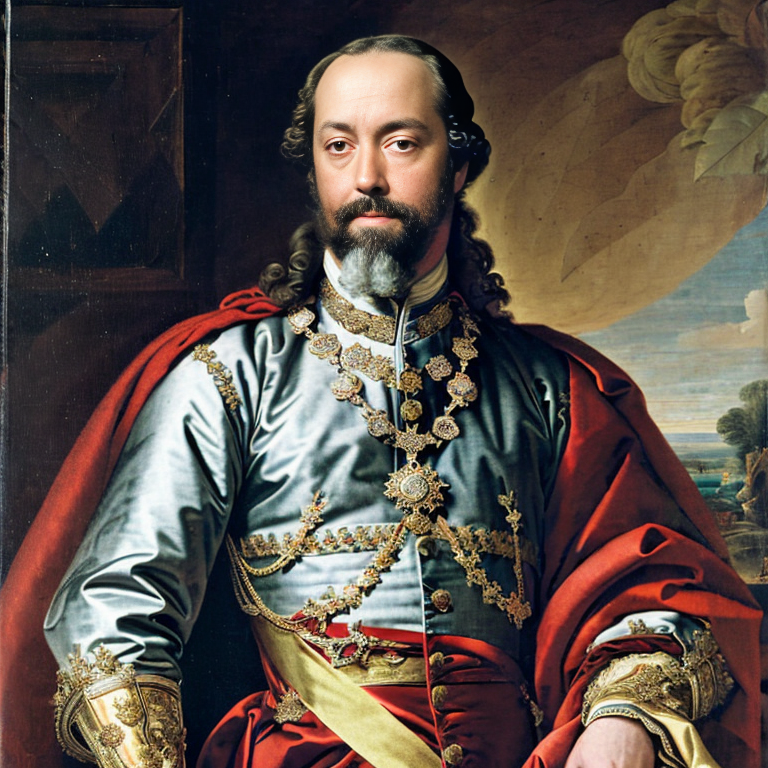
His Anointed Imperial and Royal Majesty Eliyuah Ier de Benjamin et David, the Fons Honorum of the Order above.







+ There are no comments
Add yours